.png "深圳市创雄科技有限公司")
Fixed grandstand seats vs. retractable grandstand seats: which one is more suitable for your venue needs?
Chuangxiong Stands: Comparison Guide of Fixed and Telescopic (Movable) Stand Seats (HTML Version)
Chuangxiong Stands: Comparison Guide of Fixed and Telescopic (Movable) Stand Seats
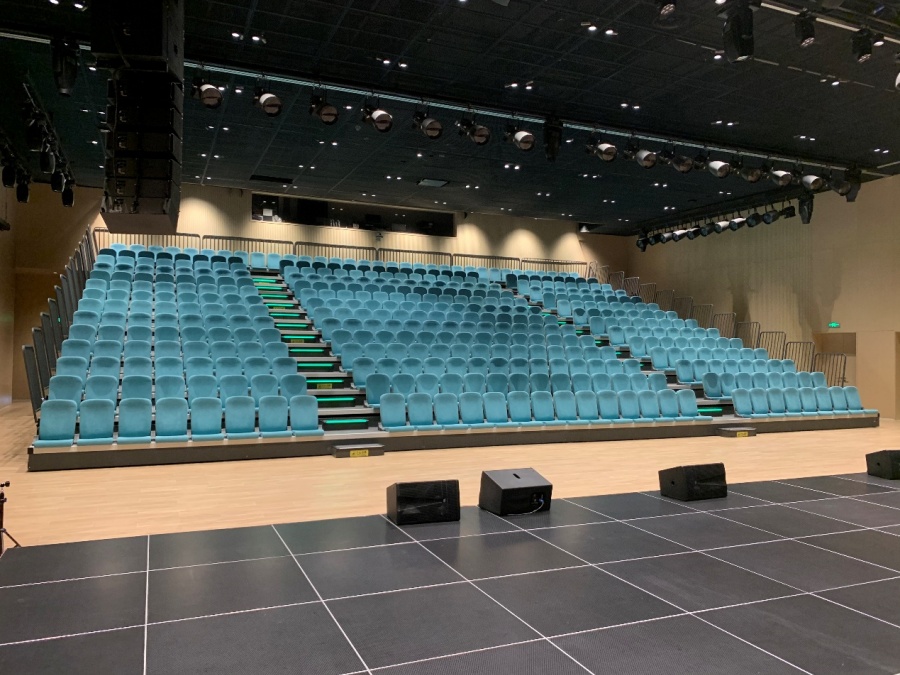
When choosing stand seats for stadiums, theaters or schools, fixed and telescopic (movable) types are the two most common ones. Each has its own advantages and disadvantages and is suitable for different scenarios. Chuangxiong Stands will compare them from the aspects of space utilization, cost, flexibility and applicable scenarios to help you make the best choice.
I. Features of Fixed Stand Seats
Advantages
Stable structure and high safety — Fixed installation, not easy to shake, suitable for long-term use.
Low maintenance cost — No frequent adjustment required, strong durability.
Suitable for large venues — Such as professional stadiums, theaters, etc., which can carry a large number of audiences.
Customized design — Can optimize viewing angle and row spacing to provide a better viewing experience.
Disadvantages
Occupies fixed space — Cannot be adjusted flexibly, not suitable for multi-functional venues.
Complex installation — Requires professional construction and high initial investment.
Applicable Scenarios
Professional football stadiums, baseball fields, large theaters, concert halls, school fixed stands
II. Features of Telescopic Stand Seats
Advantages
High space utilization — Can be folded and stored to free up space for other activities (such as basketball, exhibitions, etc.).
Flexible adjustment of seat quantity — Adapt to the needs of activities of different scales.
Convenient installation — Some models are movable, suitable for temporary event venues.
Suitable for small or multi-functional venues — Such as community gymnasiums, school auditoriums, conference centers.
Disadvantages
Slightly inferior stability — Frequent movement may affect durability.
Higher maintenance cost — Mechanical structure needs regular inspection.
Applicable Scenarios
School gymnasiums (needing to take into account activities such as basketball and badminton), community activity centers, exhibition halls, conference halls
III. How to Choose? Key Considerations
Considerations | Fixed Stands | Telescopic Stands |
Space Flexibility | Low | High |
Long-term Cost | Low (less maintenance) | Higher (needs maintenance) |
Installation Complexity | High | Low |
Applicable Activity Types | Single-purpose | Multi-purpose |
Audience Capacity | Large | Adjustable |
Choose Fixed Stands If:
The venue has a fixed purpose (such as a professional stadium).
Long-term stable use is required to reduce maintenance.
The audience capacity is large, and the best viewing angle is pursued.
Choose Telescopic Stands If:
The venue needs to frequently switch uses (such as a gymnasium serving as an exhibition hall).
Space is limited and needs to be maximized.
The budget is limited, and it is hoped to flexibly adjust the number of seats.
IV. Conclusion
Fixed stands are more suitable for long-term fixed-use venues such as professional stadiums and theaters.
Telescopic stands are more suitable for schools, community centers, multi-functional venues and other places that need flexible space adjustment.
If your venue needs to take into account multiple uses, you can consider a "mixed scheme" — part fixed stands + movable areas to balance flexibility and comfort.