.png "深圳市创雄科技有限公司")
Structural optimization of telescopic grandstand seats: how to improve load-bearing capacity and stability?
Telescopic grandstand seats are widely used in sports halls, school auditoriums, theaters, and other places due to their space saving and flexible storage characteristics. However, due to the need for frequent telescopic movement, its load-bearing capacity and stability have become key design challenges. This article will explore how to improve the safety and durability of telescopic grandstand seats through structural optimization.
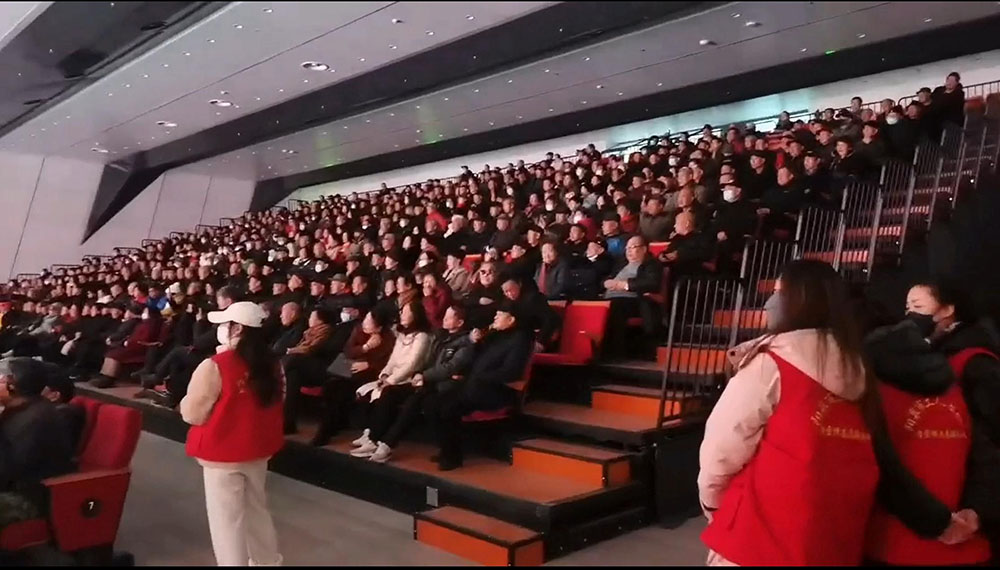
1. Load bearing requirements for telescopic grandstand seats
The load-bearing requirements for grandstand seats vary in different places:
Ordinary venues: Static load-bearing capacity ≥ 1.5 kN/seat (approximately 150kg).
Sports venues: Dynamic loads such as audience jumping and cheering need to be considered, with a load-bearing capacity of ≥ 2 kN per seat.
Outdoor stands: Additional consideration should be given to environmental impacts such as wind load, rain and snow.
If the load-bearing capacity is insufficient, it may lead to structural deformation, loose connections, and even safety hazards. Therefore, optimizing structural design is crucial.
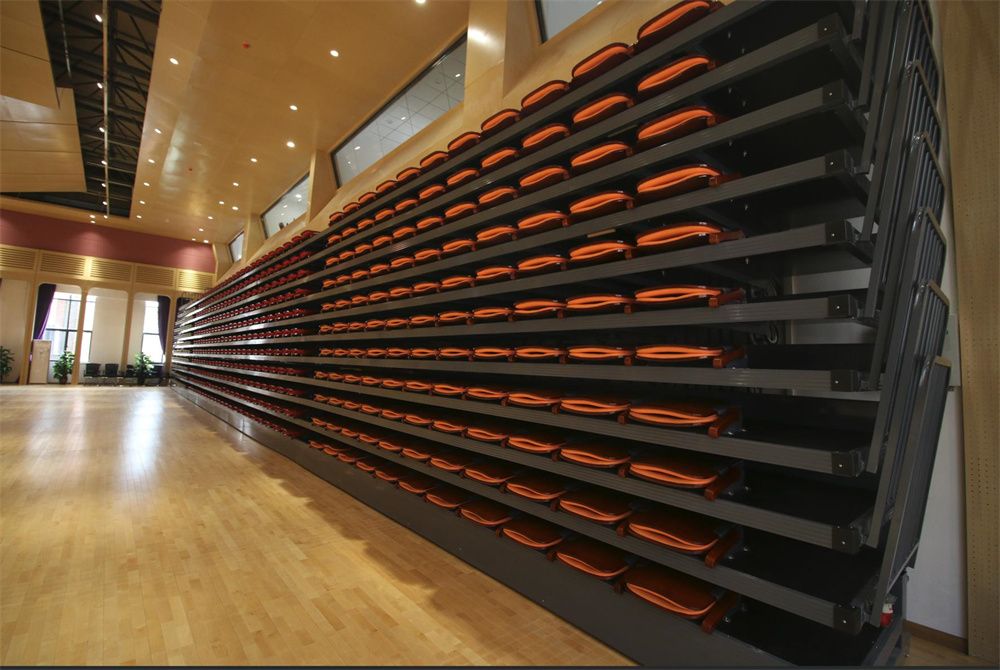
2. Key directions for structural optimization
(1) Selection of skeleton materials
The skeleton of the telescopic grandstand is usually made of steel, aluminum alloy or high-strength composite materials:
Steel (Q235/304 stainless steel): High strength, low cost, but heavy and requires rust prevention treatment.
Aluminum alloy: lightweight, corrosion-resistant, but high cost, suitable for high-end venues.
Composite materials (such as FRP): They combine lightweight and high strength, but are expensive.
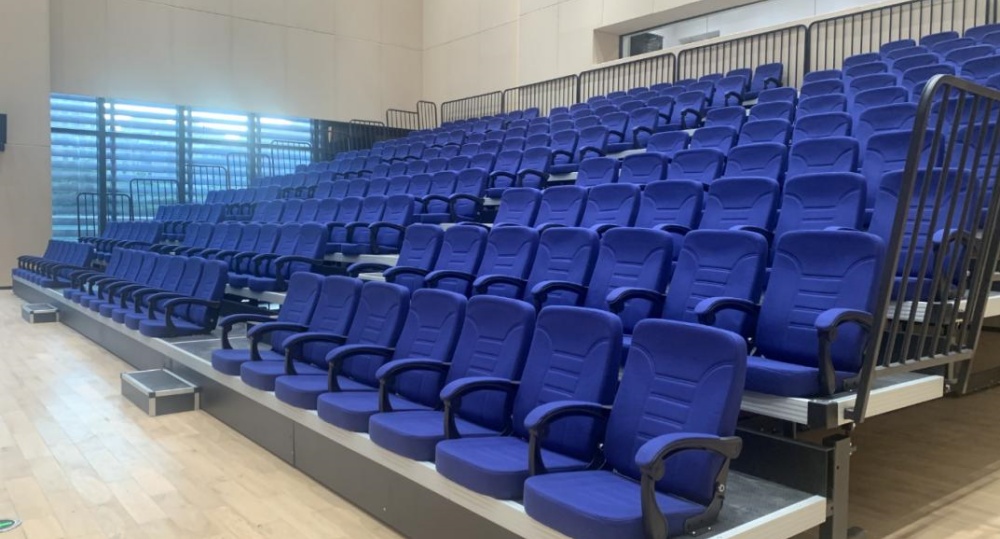
Optimization suggestions:
The main frame is made of high-strength steel, and key connection parts are rust proofed with stainless steel bolts. Lightweight design can adopt a combination scheme of aluminum alloy and local steel reinforcement.
(2) Optimization of supporting structure
The stability of the telescopic grandstand mainly depends on the support legs, guide rails, and locking mechanisms:
Single column support vs double column support: The double column structure is more stable and suitable for high-rise stands.
Slant support reinforcement: add slant support on both sides of the expansion track to reduce shaking.
Multi point locking: using hydraulic or mechanical locks to ensure secure fixation after deployment.
Optimization suggestions:
The high-rise bleachers (≥ 8 rows) shall be of double columns+slant support structure. The locking mechanism needs to have anti loosening design, such as spring locking pins or electromagnetic locks.
(3) Connection method between seat and pedal
The fixing method of the seat directly affects the overall stability:
Bolt fixation: the most stable, but installation is more complicated.
Snap on quick release: easy to maintain, but may become loose after long-term use.
Welding+bolt composite fixation: Combining the advantages of both to improve durability.
Optimization suggestions:
The main load-bearing parts are double fixed with welding and anti loosening bolts. The detachable part uses stainless steel quick release buckles for easy maintenance.
(4) Dynamic loads and anti vibration design
The movement and cheers of the audience can generate dynamic loads, which may cause structural resonance. Optimization methods include:
Add dampers: Install rubber shock absorbers on the support legs.
Optimize structural stiffness: avoid excessively long suspended pedals and reduce vibration.
Computer simulation (FEA analysis): Predicting the load-bearing limit through finite element analysis.
Optimization suggestions:
Use shock-absorbing rubber pads at critical nodes to reduce noise and vibration. Optimize the structure through FEA simulation to avoid stress concentration.
The optimization of the load-bearing capacity and stability of the telescopic grandstand seats needs to start from multiple aspects such as materials, support structures, connection methods, and anti vibration design. By selecting materials reasonably, strengthening support, optimizing locking mechanisms, and combining computer simulation and actual testing, safety and service life can be significantly improved. In the future, with the development of new materials and intelligent technologies, telescopic stands will become more lightweight, stable, and intelligent.
next:nothing ...