.png "深圳市创雄科技有限公司")
Mechanical skeleton of telescopic grandstand seats: full analysis of drive system, track material and safety guarantee
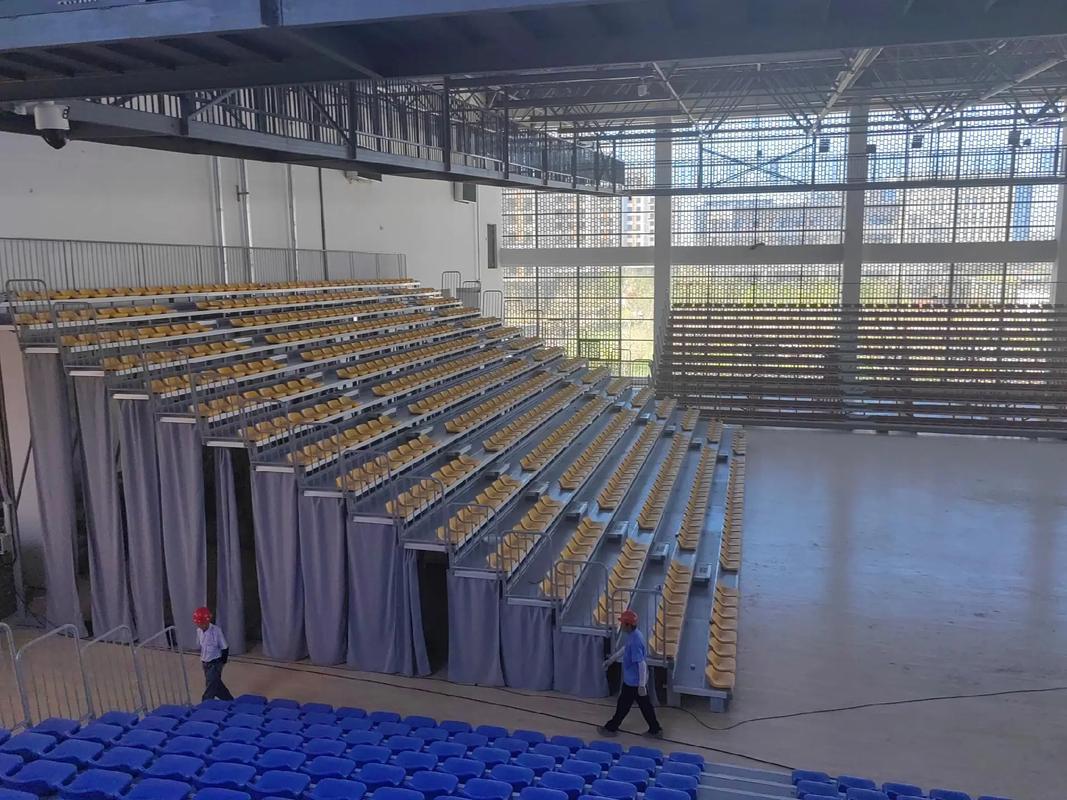
In modern multifunctional venues, telescopic stands are no longer simply "rows of chairs", but a precise system that integrates machinery, materials, and electronic control. It can transform an empty space into a neat audience seating area within a few minutes, and then quietly 'hide' it after use. This seemingly magical transformation ability originates from its powerful 'mechanical skeleton' inside. Today, we will delve into the hardcore technology core of the telescopic grandstand from three dimensions: drive system, track material, and safety assurance.
1. Drive system: The power heart of the telescopic grandstand
The telescopic movement of the grandstand may seem simple, but behind it is a sophisticated power transmission system. According to the size and frequency of use of the venue, the drive system is mainly divided into two categories: manual and electric. Manual type is suitable for small venues, with low cost and simple maintenance; The electric type, on the other hand, uses a motor and remote control to enable one person to control the unfolding and retracting of the entire row of seats, with extremely high efficiency, making it the preferred choice for modern large venues.
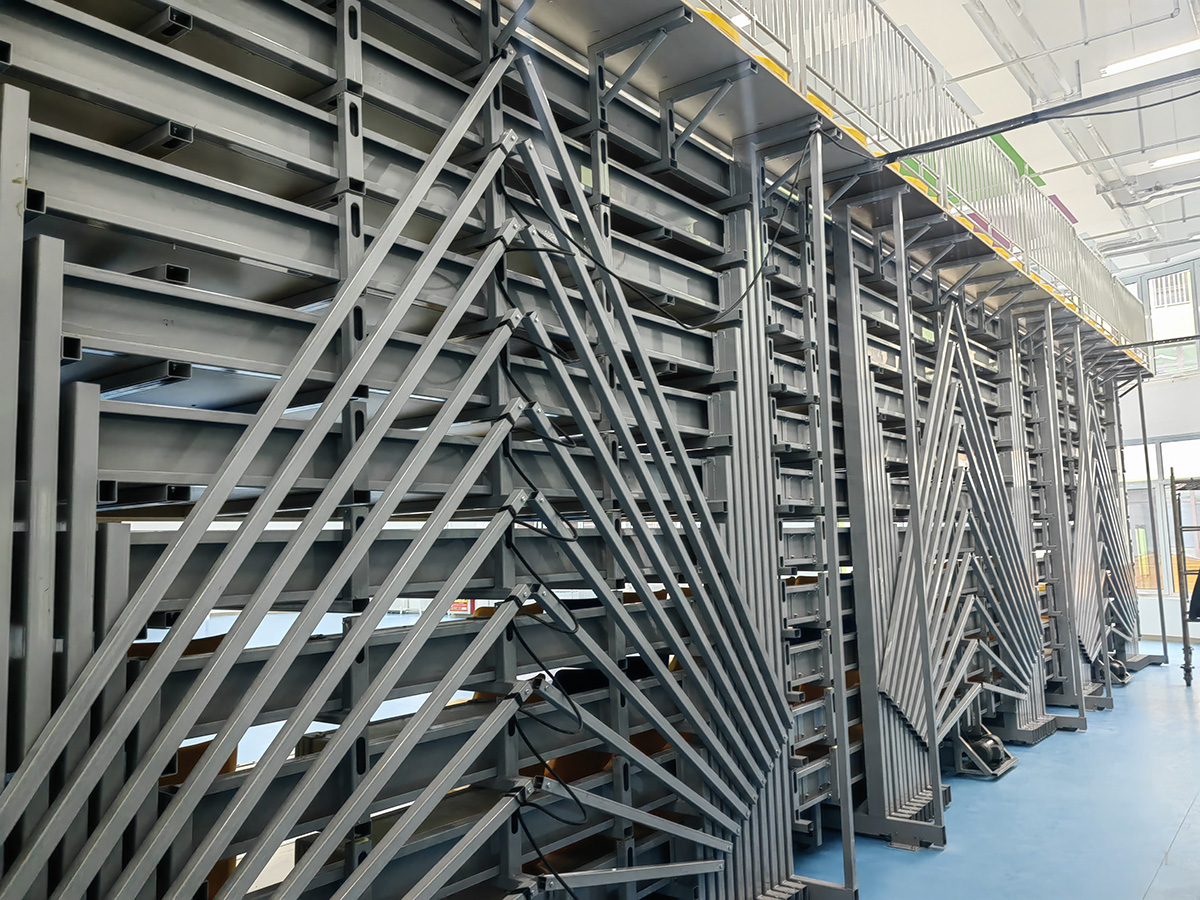
In electric drive systems, the most technologically advanced is undoubtedly the design of friction driven wheels. Taking the common swing wheel reduction motor as an example, it is installed in the lower part of the first row of the grandstand and transmits power to specially designed polyurethane friction wheels through a shaft, sprocket, and chain. This type of driving wheel is designed with multiple reinforcing ribs on the surface, which not only provides sufficient friction, but also easily overcomes small defects on the ground without damaging the wooden floor - this is crucial for basketball courts with professional sports wooden floors.
Even more astonishing is the mechanical feedback synchronous device. Due to the fact that the stands are often tens of meters wide, manufacturing errors and uneven ground can lead to inconsistent running speeds on both sides, resulting in "deviation" or even jamming. Engineers have installed a synchronization mechanism consisting of sprockets, chains, and synchronization links between adjacent wheel racks to ensure that the grandstand is neat and uniform like a parade formation during the extension and retraction process, completely eliminating hysteresis and directional deviation.
2. Tracks and casters: joints for carrying and walking
If the drive system is the heart, then the tracks and casters are the legs that support the smooth walking of the grandstand. In this field, the choice of material directly determines the lifespan and operational experience of the product.
Casters usually use double bearing wear-resistant polyurethane iron core wheels. This design has a three-layer structure: the innermost layer is a double ball bearing, ensuring flexible rotation; The middle layer is made of high-strength nylon, providing support; The outermost layer is covered with high toughness polyurethane. This composite structure can withstand high pressure and perfectly protect the floor, with extremely low operating noise. In terms of specifications, wide PU wheels with a diameter of 125mm and a wheel surface width of 40mm are standard for high-end products.
The track and guidance system are equally sophisticated. The high-quality telescopic grandstand adopts a double-layer guiding design, and the walking wheel support feet are made of fixed tension profiles and designed with guiding grooves. Each upper layer of the grandstand also adds a synchronous pulley guiding mechanism. These designs ensure that the stands maintain a balanced linear motion regardless of expansion or braking, running smoothly even when fully loaded with spectators. In terms of material processing, all steel components undergo a triple process of acid pickling for oil removal, sandblasting for rust removal, and electrostatic powder coating. The coating thickness can reach 70 μ m or more, and the corrosion resistance is extremely strong.
3. Security assurance: hidden defense lines in details
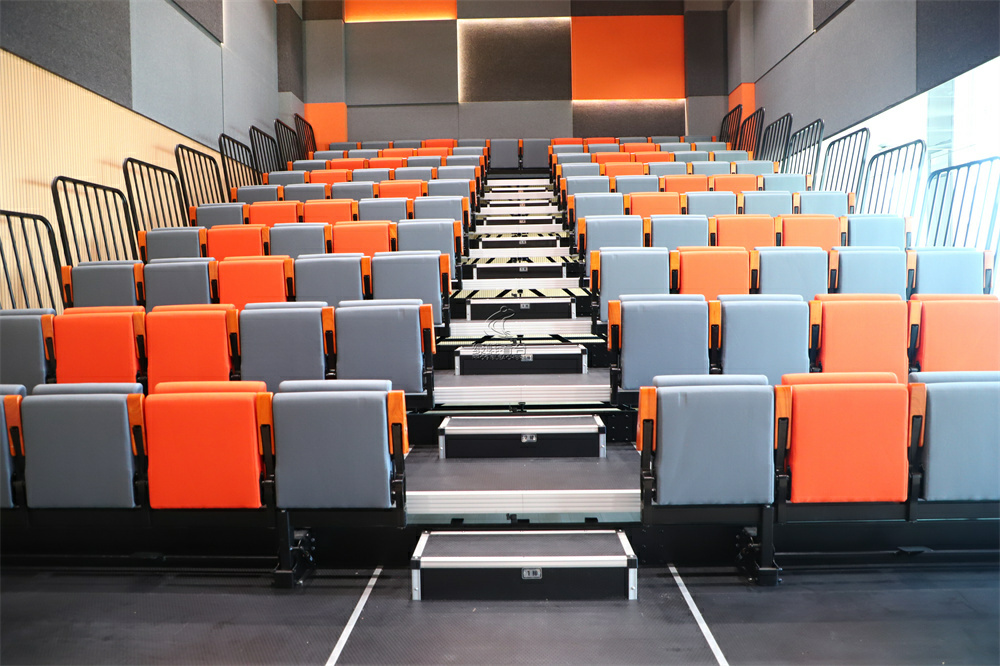
The retractable stands carry hundreds or thousands of spectators, and safety is naturally the top priority in design. A mature telescopic grandstand system that includes at least the following five layers of protection:
First priority: Structural strength redundancy design. According to industry standards, the strength requirement for the structure of activity stands is that each stand should have a static load of no less than 200 kilograms, far exceeding the weight of ordinary adults. The bed frame also needs to pass an impact resistance test: each layer should be loaded with 80 kilograms in the middle and impacted from a height of 300mm without permanent deformation. This' super matched 'design provides sufficient safety margin for unexpected impacts.
Second level: Electrical and limit protection. The electrical control system of the electric telescopic grandstand includes three major modules: motor control system, travel limit system, and leakage protection system. When the grandstand extends to its maximum position, the limit switch will automatically cut off the power supply to prevent mechanical damage caused by excessive operation. At the same time, the entire system is equipped with anti leakage design to ensure absolute safety even in humid environments.
Third level: Sound and light warning system. Many high-end telescopic stands are equipped with warning lights and warning speakers. Before and during the expansion and movement of the stands, an alarm bell will automatically sound and warning lights will flash to remind personnel present to avoid accidents such as pinching or tripping.
Fourth level: Anti slip and guardrail protection. The front edge and steps of the stands are wrapped with special aluminum titanium alloy edges, and the surface is embedded with anti slip and wear-resistant rubber strips, which can effectively prevent the audience from slipping even in humid environments. The safety guardrail adopts rigid circular tube welding, and the top can withstand a horizontal force of 1.0KN per meter. The distance between adjacent members is not more than 110mm, which not only prevents falling but also prevents children from drilling out.
Fifth level: Strict factory inspection. The telescopic stands produced by legitimate manufacturers must pass a series of tests including static load bearing, fatigue life, reliability of locking devices, and track straightness. The critical connection parts even need to undergo X-ray non-destructive testing to ensure that the internal welds are flawless.
The telescopic grandstand is not simply a combination of chairs and wheels. It is the culmination of materials science, mechanical transmission, electronic control, and modern manufacturing processes. From the power transmission of the drive system, to the material selection of the casters, to up to five layers of safety protection, every detail demonstrates the pursuit of space utilization and reverence for audience safety.
The next time you see rows of seats neatly extended or retracted in the gym, imagine the intricate "mechanical skeleton" inside - it is these invisible technologies that have enabled our venue to truly achieve "multi-purpose" and "spatial freedom". When choosing a retractable stand, it is recommended that venue operators not only pay attention to the fabric and color of the seats, but also deeply understand whether their "bones" are strong, whether their "joints" are flexible, and whether their "nerves" are sharp. After all, safety and durability are the ultimate standards for measuring the value of retractable stands.
previous:nothing ...